Credit Where It’s Cute: A Fan’s Field Guide to Art Etiquette Without the Feral Comments
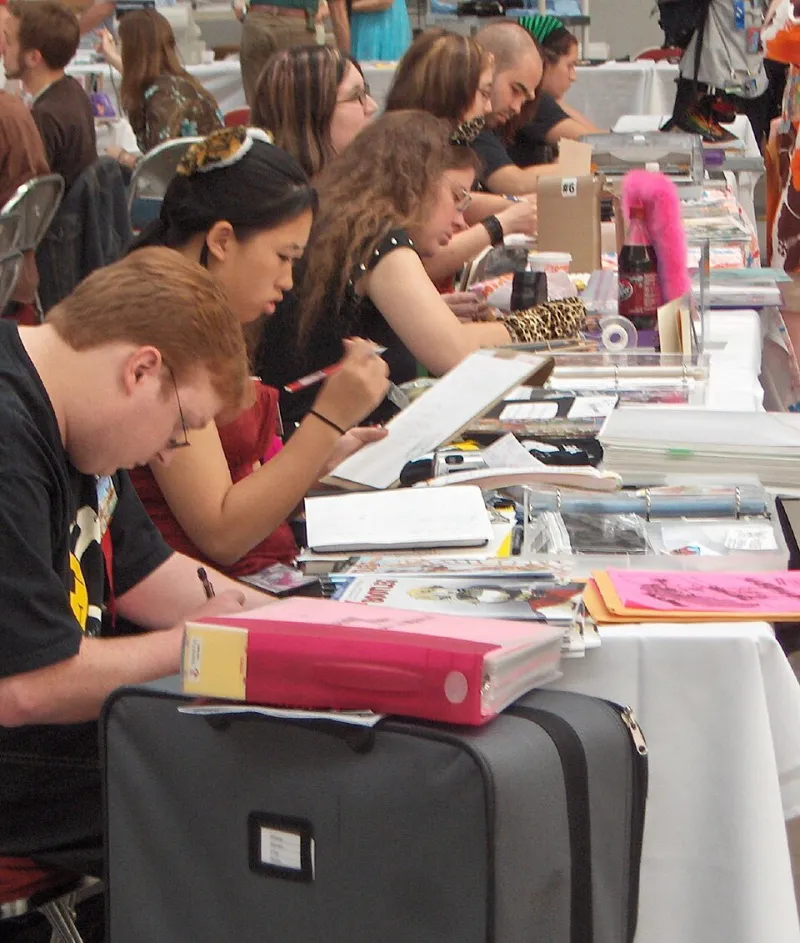
Photo: Laurence "GreenReaper" Parry, CC BY-SA 3.0, via Wikimedia Commons
Fan art is one of the softest miracles of fandom. Someone looked at a fictional character, felt a feeling, and decided to spend eleven hours rendering that feeling in light and color. Then someone else downloaded it, cropped off the signature, and posted it with “not mine!” like that counts as a legal defense. The internet is a beautiful place, but sometimes it behaves like a raccoon in a craft store.
At Nyarth, we like our fandom cozy, our comments kind, and our credit lines accurate. So here’s a practical etiquette guide for praising artists, sharing their work, navigating conventions, and handling the increasingly spicy topic of AI art — all without stepping on anyone’s tail.
Praise Is Free — Make It Specific
“This is amazing” is lovely. “This is amazing, and the way you painted the rim light on the sword made me feel things about a fictional sword” is better. Specific praise tells an artist that you actually looked. It also gives them something nicer to read than the twelfth “first!” comment of the day.
A few cozy rules for comment sections:
- Compliment the craft, not just the character. “Your linework is so clean” lands better than “step on me.”
- Ask before offering critique. Unsolicited concrit is like bringing a spreadsheet to a picnic.
- Keep shipping comments respectful. You can adore a pairing without demanding the artist defend it like a thesis.
- If the artist asks for no reposts, believe them the first time. No follow-up essay required.
And please, do not treat an artist’s comments as a suggestion box for free requests. “Draw this next” is not a compliment. It is a to-do list you assigned to a stranger.
Credit Is Not a Hashtag You Sprinkle Like Salt
Proper credit means naming the artist, linking to their original post when possible, and not hiding their handle behind a decorative sticker. “Credit to the artist” is not credit. It is a vague gesture toward the concept of credit. If you do not know who made the piece, your options are: find out, ask politely, or do not repost it.
For reposts, the safest rule is simple: ask first. Many artists allow shares with credit and a link. Some do not allow reposts at all. Some allow it on certain platforms but not others. This is not being difficult; it is being a person with preferences about their own work.
A good repost caption looks like this: “Art by @artistname. Original post linked here. Shared with permission.” A bad one looks like “lol found this.” We all know the difference. Let’s act like it.
The Quiet Repost Problem
“Quiet reposts” — saving art to a folder, dropping it in a Discord server, or using it as a reaction image without a source — feel harmless because they are small. But small uncredited shares add up. Artists get asked “did you draw this?” less often than they get their work passed around like a communal snack.
If you are sharing in a private server, drop the artist’s handle anyway. It takes four seconds. If you are using art in a video, stream overlay, or fan zine, ask first and be ready to hear no. A no is not a personal attack. It is an artist protecting their time, income, and sanity.
This is especially true for commissions and fanart that artists sell at conventions. If you can afford the $6 sticker, you can afford the two seconds it takes to tag the person who drew it.
AI Art Disputes: Keep Your Claws Retracted
The AI-art conversation is loud, complicated, and often conducted with the emotional regulation of a hungry cat at 3 a.m. Our house rule: be firm about credit and consent, but do not turn every comment section into a witch trial.
If an artist says they did not use AI, do not demand forensic proof unless you have a real reason and a private channel for it. If you suspect a repost account is passing AI work off as hand-drawn, report or mute and move on. Harassment is not a credit policy. And if you are sharing art, be clear about the source — including whether AI tools were involved, if that is known and relevant.
Support artists who are transparent. Avoid accounts that scrape and resell. Keep receipts private unless someone is genuinely being harmed. The goal is a safer fandom, not a livestreamed courtroom.
Convention Manners: Artist Alley Is Not a Petting Zoo
Conventions are where fan etiquette becomes physical. Do not touch art without asking. Do not block a table to take a photo of every print while the artist waits. Do not ask for a free sketch “for exposure” and then act surprised when exposure does not pay rent.
When you buy something, say thank you. When you take a business card, actually look up the artist later. When you ask for a photo of their booth, ask first. And if an artist is eating lunch, let them eat. They are a person, not a vending machine with a portfolio.
Cosplay applies too: ask before photos, respect “no,” and never touch a prop or costume without permission. A convention badge is not a consent form.
The Nyarth House Rule
Here is the whole guide in one sentence: treat artists like people whose work you are lucky to enjoy. Praise specifically, credit clearly, ask before reposting, respect no, and keep the comment section cozier than a heated blanket.
Fandom is at its best when it feels like a shared living room — crowded, a little chaotic, and full of snacks. The least we can do is not steal the art off the walls.